Materiality
Identification of materiality
The Group has identified materiality as issues that are essential to its stakeholders and have a significant management impact on the Group's business, in light of the increasing importance of sustainability worldwide, including ESG (Environmental, Social, and Governance) and the UN Sustainable Development Goals (SDGs).
Materiality identification process
-
STEP1
Listing of candidate materiality issues
We have developed an extensive list of environmental, social, and economic challenges, referring to international frameworks and guidelines such as the SASB Standards and SDGs, as well as industry-specific macro trends.
-
STEP2
Identifying issues and assessing their importance
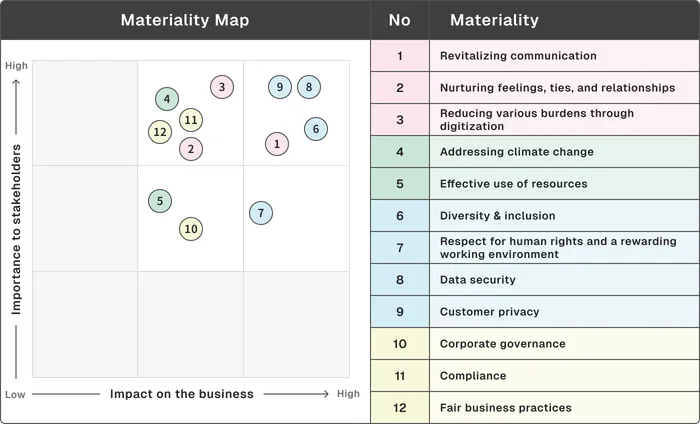
For each of the issues listed in STEP 1, we identified areas of particular relevance to the Group's business. We prioritized them based on their importance to stakeholders and our business.
-
STEP3
Identifying materiality
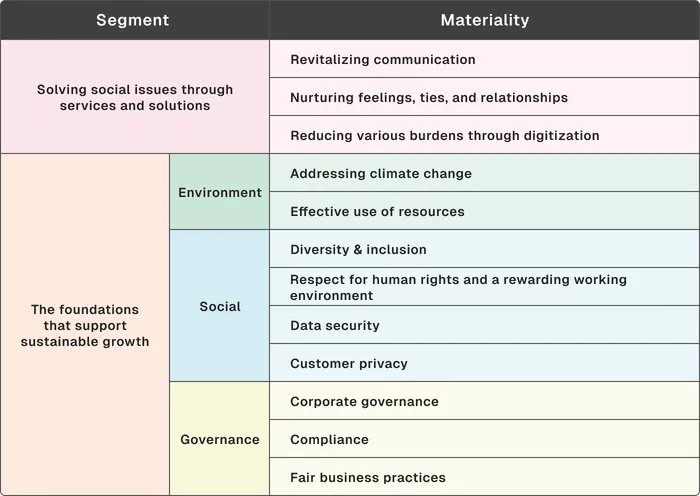
Of the issues identified and assessed in STEP 2, we identified materiality by classifying and organizing the essential matters into four categories: "Social Impact through Our Services" and "Environment," "Society" and "Governance," which are the foundations that support sustainable growth. The identified materiality was approved and decided by the Board of Directors.
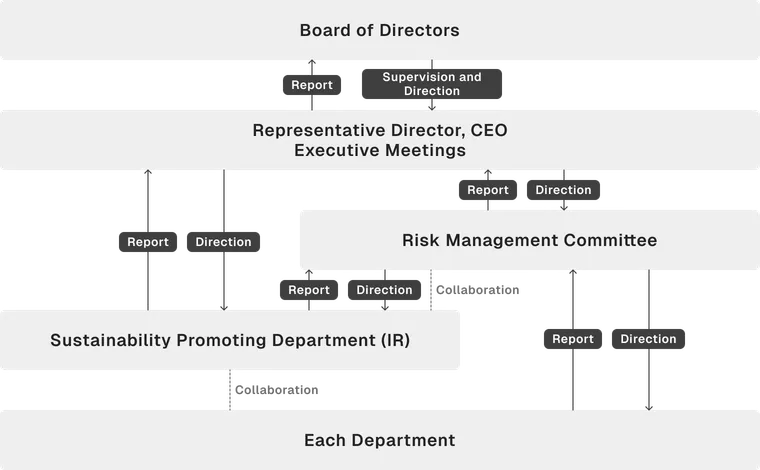
Sustainability Governance Structure